
Loading...
Serving San Bruno, CA and surrounding areas. (415) 723-8447
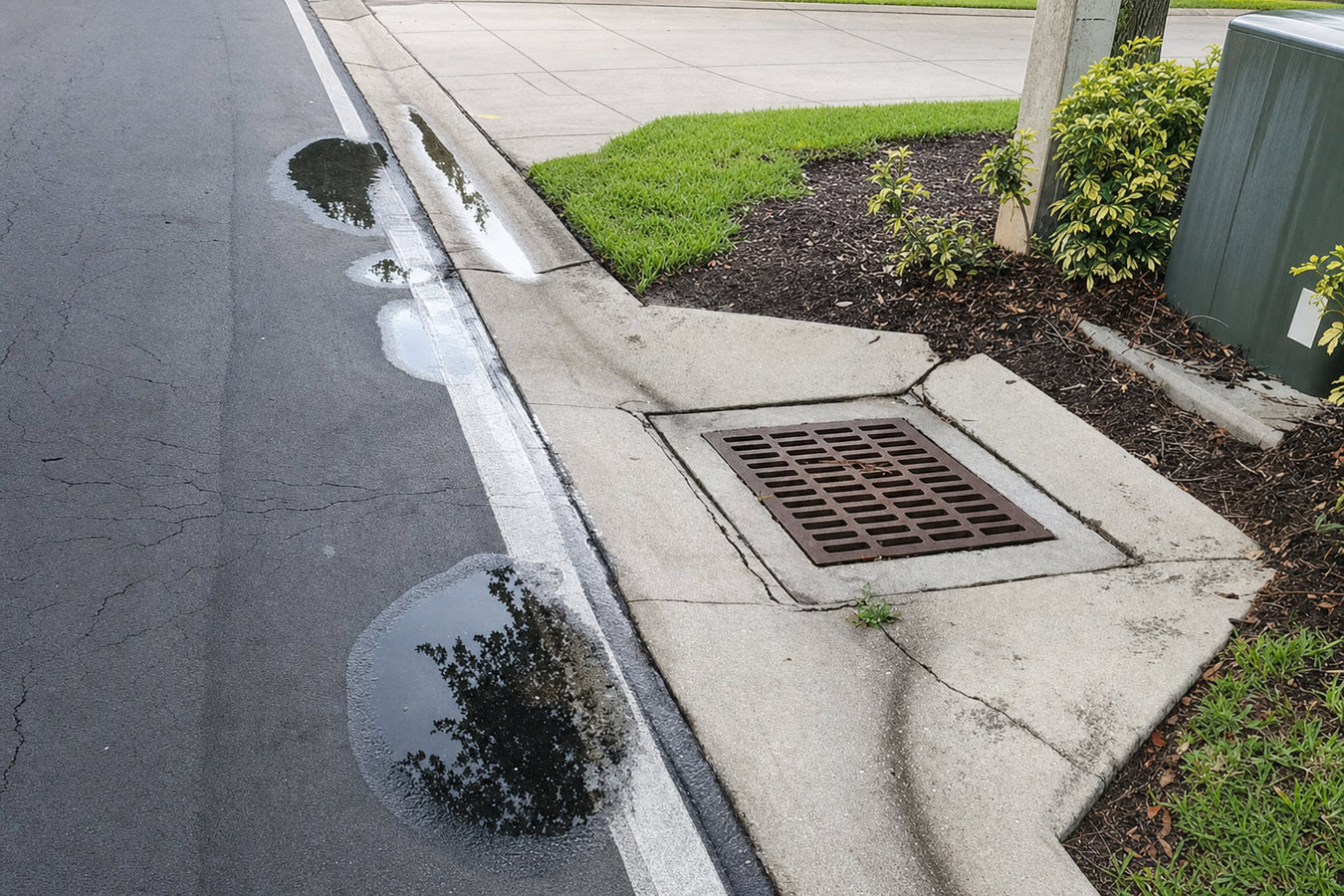
Standing water on your driveway is not just an inconvenience. Every time it pools, it works into the pavement and weakens the base below. We find where the problem is and fix it so water drains away from your home every time it rains.
Drainage solutions in San Bruno involve assessing where water pools or flows incorrectly, then installing channel drains, catch basins, or re-grading the surface to redirect runoff away from your pavement and structure. Most residential jobs are completed within one to two days once work begins.
San Bruno sits on clay-heavy soils that absorb water and swell, then shrink and crack as they dry. That repeated cycle pushes against pavement from below and creates low spots where water collects. If your driveway or parking area has soft spots, recurring cracks, or areas that stay wet long after the rain stops, the drainage is contributing to those problems. In many cases, water running in the wrong direction is also the reason underlying grading and excavation work becomes necessary before a pavement repair will hold.
The good news is that the fix is usually straightforward once the source is identified. A site assessment tells us where the water is going wrong, and from there we can explain exactly what needs to happen and what it will cost before any work begins.
If standing water appears in the same location after every San Bruno rain, the surface is not draining the way it should. Each time that water sits there, it seeps into the pavement and the base below. Repeated saturation is one of the leading causes of early pavement failure on the Peninsula.
Sloped driveways in San Bruno's hillside neighborhoods commonly direct water toward the structure instead of away from it. Left alone, that flow gets under garage doors, seeps toward the foundation, and erodes the soil alongside the house. A channel drain or re-grade stops it before it causes structural damage.
Cracks and sunken areas that keep coming back after repairs are a sign that a drainage problem is still active beneath the surface. If the base has been repeatedly saturated, patching the top layer without fixing the water source produces repairs that fail again within a season or two.
A consistently wet garage floor after storms is a clear sign the driveway slope or drainage is directing water toward your structure. This is especially common on properties built in the 1950s and 1960s, when drainage design standards were less rigorous. Fixing the driveway drainage is the direct solution.
We handle the full range of residential and commercial drainage repairs in San Bruno and the surrounding Peninsula. For driveways where water pools at the base of a slope, a channel drain set flush with the finished surface is often the most cost-effective fix - it intercepts the flow before it reaches the garage and routes it to a safe outlet. When water is infiltrating from multiple directions or the existing grade is fundamentally wrong, we re-grade the surface so it naturally sheds water toward the street or a designated outlet. If the problem involves speed bump installation or other pavement improvements happening at the same time, combining the drainage work with those repairs is both more efficient and more cost-effective than scheduling separate visits.
For more involved situations - where pipes need to run to a catch basin or connect to an existing storm line - we coordinate the full scope including saw-cutting, excavation, pipe installation, base compaction, and repaving. The work ties directly into the same grading and excavation process we use for site prep on larger paving jobs, so the drainage and the pavement are designed to work together from the start. We explain where the water will go and what the finished system will look like before any work begins.
Best for driveways where water pools at the base of a slope or collects at a low point - a flush-mounted drain grate intercepts the flow before it reaches the garage or house.
Suited for larger areas or situations where water needs to be collected and routed underground to an existing storm line or dry well.
Suited for driveways where the slope is fundamentally wrong - the surface is re-shaped so water naturally flows toward the street or a drainage outlet.
Suited for property owners who are already planning a driveway or parking lot repave - the drainage system is integrated into the new pavement from the start.
San Bruno gets the majority of its annual rainfall between November and April, and the city sits on the expansive clay soils common throughout San Mateo County. Those soils swell when wet and shrink when dry, putting constant pressure on pavement from below. When drainage is poor, the wet season saturates the base and accelerates every form of pavement damage - cracking, sinking, and edge deterioration. The dry summers then cause the same saturated soil to contract, widening the cracks that formed. On top of that, San Bruno's persistent coastal fog keeps surfaces damp overnight even in summer, so there is rarely a long dry period that gives a compromised base time to fully recover. Homes built in the 1950s and 1960s - which make up a large portion of San Bruno's housing stock - were often built with minimal attention to drainage design, which means drainage problems are especially common here.
The hillside terrain in the western part of San Bruno adds another layer of risk. Many properties there have driveways that run uphill from the street, and water running downhill toward the garage is a routine problem rather than an edge case. In those situations, a well-placed channel drain or a corrected surface grade is not optional - it is the only reliable way to protect both the pavement and the structure below it. We work throughout San Bruno and serve neighboring communities including Millbrae and South San Francisco, where similar clay-soil and wet-winter conditions drive the same drainage needs.
Tell us where water is pooling, whether it reaches your garage, and how long the problem has been happening. We respond within one business day and schedule a free site visit so we can see the slope and surface conditions firsthand before recommending anything.
We walk the driveway or lot, check the grade, look at where the water is currently going, and give you a written estimate that spells out the drain type, pipe routing, and where the water will be directed. No pressure to commit on the day of the visit.
If the work involves connecting to a public storm drain or changing how water leaves your property, a permit may be required. We handle the application and coordinate any inspections - factor in a few extra days in the timeline if a permit is needed for your specific project.
The crew saw-cuts and removes asphalt where needed, sets drain boxes or pipes at the correct depth and slope, compacts the base, and repaves over the repaired sections. Most residential jobs finish in a single day. We walk the finished work with you and explain the curing timeline before leaving.
Free site visit, written estimate, no pressure. We respond within one business day.
(415) 723-8447California requires paving contractors to hold a current state license before doing work on your property. You can look up any license number yourself through the California Contractors State License Board, so you know you are hiring someone who has met the state's requirements. We carry the license and the insurance to back it up.
The expansive clay soils on the San Francisco Peninsula require drainage designs that account for soil movement and seasonal swelling. Working in this region consistently means we understand how those soils behave through wet winters and dry summers, and we design systems that hold up over time - not just on paper.
San Bruno falls under San Mateo County stormwater management rules, which govern how drainage work must be done to protect local waterways. We know which projects require permits and which do not, and we handle the paperwork when needed so you do not have to navigate that process on your own.
Because we are a full-service paving contractor, we handle the drainage installation, the saw-cutting, the base compaction, and the repaving in a single coordinated job. You do not need to manage multiple contractors or worry about whether the drain and the pavement will work together - that coordination is our responsibility.
Every drainage job we take on is a commitment to solving the actual problem, not just filling in the visible damage. When water drains the way it should, the pavement lasts longer and you stop dealing with the same repairs every spring.
Add a permanent asphalt speed bump to a shared driveway or parking area, often scheduled alongside drainage repairs for a single-visit efficiency.
Learn MoreSite grading to correct slopes and prepare a stable base, often the first step before a drainage system or new pavement goes in.
Learn MoreSan Bruno winters start in November. Call now to get the drainage fixed while the ground is dry and scheduling is easy.